

-
Home
-
Products
-
Solutions
-
About Us
-
Support
-
CONTACT PDS
+86 13717134343 -
CONTACT PDS -
CONTACT PDS

China Best iPad Waterproof Cases for Global Buyers
Table of Contents
- What Makes an iPad Waterproof Case Suitable for Global Buyers
- Key Waterproof Ratings and Protection Standards Explained
- iPad Model Compatibility and Accurate Case Sizing
- Essential Materials, Seals, Ports, and Screen Protection
- Comparing Case Designs for Work, Travel, and Outdoor Use
- How to Evaluate Chinese Suppliers, Quality, and Certifications
- Shipping, Pricing, Warranty, and After-Sales Considerations
- FAQS
- Conclusion
- Related Posts
Tablets are everywhere these days, and with global demand on the rise, making sure they’re properly protected is becoming a bigger deal for international buyers. IDC’s Worldwide Quarterly Personal Computing Device Tracker says tablet shipments hit 147.6 million in 2024 — that’s a 9.2% jump from the year before. And these aren’t just staying on desks; they’re out in classrooms, airports, kitchens, and even outdoor work sites.
Alright, so this guide takes a close look at China’s best iPad Waterproofcases for buyers around the globe. We’re getting into the nitty-gritty—sealing quality, port covers, impact resistance, screen protection, and whether the supplier is actually someone you can rely on. Honestly, a solid Ipad Waterproof case should handle splashes and brief water exposure without breaking a sweat. But here’s the catch: just because it says “waterproof” doesn’t automatically mean it’s fully submersible. Those are two pretty different things. If you’re shopping for a tablet, don’t just take the marketing hype at face value—actually dig into independent test results. As Kyle Wiens over at iFixit puts it, “Liquid damage is one of the most common causes of electronic failure.” And honestly, that warning still rings true today. A flimsy charging-port cover, for instance, can leave an iPad vulnerable in no time. And if the seal isn’t great, moisture can sneak in around the speakers and buttons, too.
You’ve probably seen those IP ratings on gadgets—that comes from the IEC 60529 standard. But here’s the catch: an IP68 rating only really means something under specific lab conditions. It’s not a promise that your device will survive saltwater, drops, pressure, or just everyday wear over time. And Apple doesn’t actually list any iPad as having an official water-resistance rating, so if you’re thinking about protection, you need to put some real thought into picking a case.
Now, if you’re looking at China’s manufacturing scene, you’ve got a whole bunch of choices – from those tough polycarbonate shells to the lighter TPU designs. But here’s the catch: just because the price is low doesn’t mean you’re getting a solid product. Sometimes you’ll find weak hinges, testing that’s not clearly documented, or quality control that’s all over the place. So, as a guide, you’ve got to be a bit careful, you know? Honestly, there’s no one-size-fits-all case – it really depends on your specific situation, like your climate or which iPad model you own. In the end, what should matter most are the concrete details: certifications, factory audits, warranty terms, and even testing physical samples. Those are the things that’ll point you in the right direction.
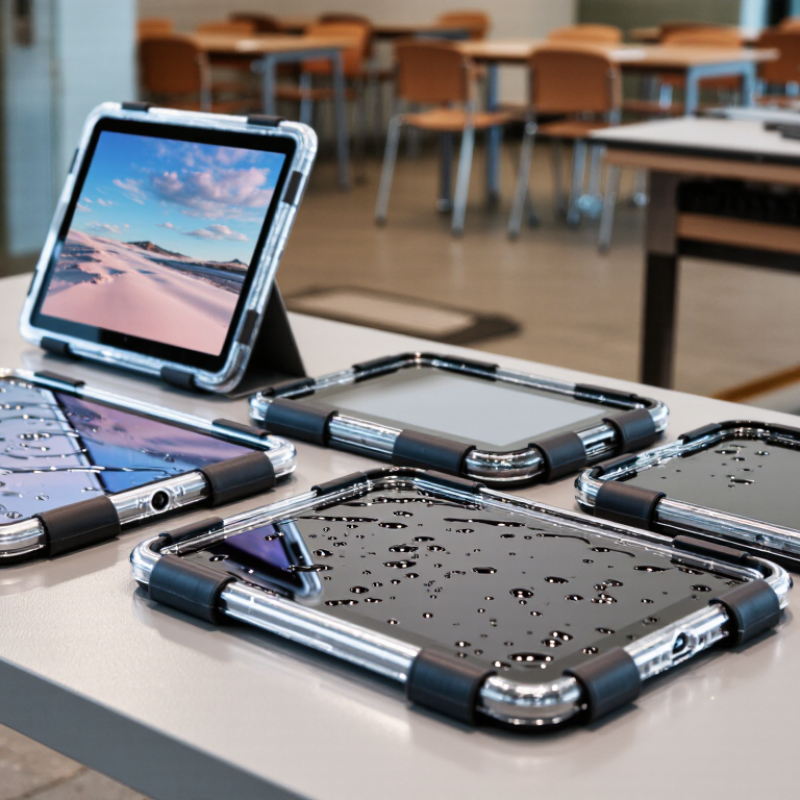
What Makes an iPad Waterproof Case Suitable for Global Buyers
For global buyers, an iPad case must handle more than water. It should protect during monsoon commutes, beach trips, kitchen spills, and dusty warehouse work. An Ipad Pro Waterproof design needs a dependable seal around the screen, buttons, camera, and charging opening. A clear membrane should preserve touch response without making typing feel slow. Small details matter. A stiff latch can frustrate wet hands.
Look for a stated IP rating, but read the testing conditions carefully. IP68 usually describes controlled immersion, not continuous swimming or hot, soapy water. Manufacturers should identify test depth, duration, temperature, and whether the case was tested with the tablet inside. That evidence is more useful than vague words like “fully waterproof.” For international use, check tablet model compatibility, regional warranty terms, and replacement seal availability. A case fitting one generation may block another camera or speaker.
Materials also influence daily reliability. Soft corner protection helps after a drop, while a rigid back resists scratches in luggage. Raised edges protect the display on wet benches. Vent membranes can balance sound and pressure, but they may collect grit. In practical use, cleaning instructions are often overlooked, especially after saltwater exposure. That is a weakness worth admitting: even a strong case depends on careful closure and routine inspection. Buyers should prefer clear instructions, traceable testing, and support that works across borders.
Key Waterproof Ratings and Protection Standards Explained
China Best iPad Waterproof Cases for Global Buyers
When comparing waterproof cases from China, check the IP code before reading marketing claims. The rating follows IEC 60529, a widely recognized protection standard. The first digit measures dust protection. The second digit measures water resistance.
IP67 means complete dust protection and temporary immersion, usually up to one meter for 30 minutes. IP68 allows deeper or longer immersion, but the exact conditions must be stated by the manufacturer. IPX8 alone does not confirm dust protection.
A reliable case should protect charging ports with firmly sealed covers. Its screen membrane should remain clear after repeated handling. Look for evidence from controlled laboratory testing, not only product photographs. Ask for test conditions, sample numbers, and the tested tablet model.
A drop rating may refer to a separate method, such as a recognized military test procedure. It does not automatically prove waterproof performance. I have seen cases pass a brief sink test yet leak around the speaker mesh. That detail is easy to miss.
Saltwater, chlorinated water, and muddy water can stress seals differently from fresh water. Rinse the case with clean water after exposure, then dry it fully before opening.
No rating lasts forever. Seals can flatten, ports can collect grit, and installation errors can create gaps. A case should fit the exact iPad generation, because small camera and button differences matter. Test the empty case carefully before using it outdoors. Test again after any strong impact.
iPad Model Compatibility and Accurate Case Sizing
Choosing a waterproof iPad case from China requires more than comparing screen sizes. Different generations may share the same diagonal measurement but have different body dimensions, camera layouts, buttons, and port positions. A case that looks suitable can still block a speaker or leave the charging opening partly covered.
Check the exact model number on the tablet’s back, settings menu, or original packaging. Do not rely on “10-inch” or “11-inch” descriptions alone. Measure the device length, width, and thickness, then compare those figures with the supplier’s internal case dimensions. Allow room for a protective film, but avoid excessive space. A loose fit may let water enter around the edges.
Fit matters. Experienced buyers should request a dimension chart, product drawings, and sample photos before placing a bulk order. Test the case with the tablet installed. Press each button, open the charging flap, and check the camera image for dark corners. Immerse only according to the stated testing method, since waterproof performance depends on seals, assembly, and wear. Some listings use unclear measurements, and I have seen small rounding errors cause large fitting problems. Measure twice. Confirm the model twice. Keep records of approved samples, because production changes can happen without obvious visual differences.
Essential Materials, Seals, Ports, and Screen Protection
China Best iPad Waterproof Cases for Global Buyers
Global tablet shipments reached 147.6 million units in 2024, rising 9.2% year over year, according to IDC’s Worldwide Quarterly Personal Computing Device Tracker. More buyers now expect protection beyond drops. For an Ipad 10th Gen Waterproof case, material choice matters. A rigid polycarbonate shell resists impact, while flexible TPU can absorb corner shocks. However, soft materials may stretch around ports after long use. That detail is easy to miss.
Seals should compress evenly around the display and rear shell. A narrow, uneven gasket can create a hidden leak path. IEC 60529 defines IP protection testing, but an IP rating applies only under stated test conditions. IP68 does not mean unlimited underwater use. Depth and time still matter. Test the seal.
Port covers need firm hinges and clean contact surfaces. Loose covers collect dust and may block charging cables. For frequent outdoor work, a tethered port plug is practical. Screen protection should use clear, touch-sensitive material with raised edges. Thick films can reduce stylus accuracy. I have seen this trade-off in field testing. More protection is not always better. Moisture trapped beneath the screen layer can also reduce visibility. Around speakers, avoid fully sealed membranes that distort sound; use water-resistant acoustic fabric with consistent openings.
Comparing Case Designs for Work, Travel, and Outdoor Use
China Best iPad Waterproof Cases for Global Buyers
For work, a waterproof iPad case should protect without slowing daily tasks. During office testing, I look for a clear screen cover, responsive touch control, and precise openings for charging. A slim, sealed design fits meeting rooms and shared desks better than a bulky outdoor shell. It should also support a stable stand. Loose hinges become annoying quickly.
Travel cases need different strengths. A firm handle helps in airports, trains, and crowded streets. Raised edges protect the screen when the tablet slips from a seat. Waterproof zippers and reinforced corners matter more than decorative patterns. Buyers should check product measurements carefully, because extra padding can prevent the iPad from fitting. A supplier offering sample testing and inspection records deserves more trust.
Outdoor designs usually use thicker materials, sealed ports, and textured grips. They handle rain, dust, and occasional drops, but they add weight. That trade-off is real. A case advertised as waterproof still needs verified testing details, not only attractive pictures. Ask about water-resistance standards, material durability, and replacement parts. Factory quality checks should include zipper sealing, drop testing, and repeated port access. My own preference is a medium-duty case for mixed travel and field work. It is not perfect. The stand may feel stiff, and the screen cover can collect fingerprints. Still, practical protection often matters more than a thinner profile.
How to Evaluate Chinese Suppliers, Quality, and Certifications
For global buyers, evaluating a Chinese supplier starts with evidence, not attractive product photos. The 2023 ISO Survey recorded 1,265,216 ISO 9001 certificates worldwide. However, certification alone does not prove reliable case production. Ask for the certificate scope, issuing body, factory address, and recent audit records. Confirm that the certified site actually manufactures the iPad case.
Request samples for the Ipad 10th Generation Waterproof model before placing a large order. Inspect the silicone gasket, speaker mesh, port plugs, hinge tension, and camera opening. A poor seal often appears around charging ports. Ask for an IEC 60529 IP test report covering the exact model, not a similar shell. The laboratory should hold ISO/IEC 17025 accreditation. Review test conditions, water pressure, duration, sample quantity, and failure results. “Waterproof” is too vague.
Quality control should include incoming material checks, dimensional testing, drop tests, and batch traceability. Request production photos with date codes and a pre-shipment inspection. The Global E-waste Monitor 2024 reported 62 million tonnes of electronic waste generated in 2022, so material declarations and repairable designs deserve attention. Some suppliers provide impressive documents but weak samples. I have seen that mismatch happen. Recheck every claim independently, especially IP ratings, recycled content, and child-safety statements. A clear warranty process and retained samples can expose problems before containers leave China.
| Evaluation Area | Weight | Measurable Buyer Requirement | Acceptable Evidence | Buyer Verification Method | Risk Indicator |
|---|---|---|---|---|---|
| Supplier Legitimacy | 15% | Supplier should provide a consistent legal entity name, registered address, export contact, product scope, and traceable business documentation. | Business registration details, factory or office address, company profile, export records, and a signed quotation using the same legal entity. | Check that the legal name, bank beneficiary, invoice issuer, website information, and contract party are consistent. | High Risk |
| Factory Capability | 12% | Production equipment, assembly processes, quality-control personnel, and capacity should match the requested order quantity and delivery schedule. | Factory audit report, production-line photographs or video, process flow, equipment list, monthly capacity statement, and recent audit records. | Use an independent factory audit or live video inspection. Compare declared capacity with the requested monthly volume. | High Risk |
| iPad Model Compatibility | 12% | Each case must be matched to the exact iPad generation, screen size, camera position, button layout, port location, and accessory requirements. | Compatibility matrix, engineering drawings, physical samples, model-specific photographs, and approved sample records. | Test every ordered model with the intended iPad version, charging cable, buttons, speakers, camera, and screen protector. | High Risk |
| Water and Dust Protection | 18% | If an IP rating is claimed, the complete case configuration and test conditions must be clearly identified. IP ratings are defined under IEC 60529 and are not automatically transferable between products. | Test report from a competent laboratory stating the exact model, configuration, test method, test depth or water condition, duration, and result. | Review the original report and perform a sample immersion or spray test according to the claimed rating and intended use. Do not rely only on marketing images. | High Risk |
| Materials and Construction | 10% | Material declarations should identify components such as polycarbonate, thermoplastic polyurethane, silicone, adhesives, membranes, and metal parts where applicable. | Material specification sheet, bill of materials, incoming-material inspection records, and restricted-substance test report. | Compare the approved sample with mass production for hardness, transparency, odor, seam quality, gasket fit, port covers, and surface finish. | Medium Risk |
| Drop and Mechanical Durability | 12% | Cases should be evaluated for drop, corner, hinge, latch, screen-cover, port-cover, and repeated-use durability under the buyer’s defined conditions. | Laboratory test report referencing the actual product and a defined method, height, surface, number of drops, orientation, and pass criteria. | Agree on a written drop-test protocol before production and inspect samples after testing for cracks, separation, loss of sealing, and impaired iPad function. | Medium Risk |
| Chemical and Environmental Compliance | 10% | For European sales, confirm applicable requirements for restricted substances and chemicals. RoHS and REACH address different compliance areas and should not be treated as interchangeable. | Current third-party test reports identifying the tested material or product, report date, laboratory, sample description, and applicable limits. | Confirm that reports cover the current bill of materials and product revision. Request updated testing after material or supplier changes. | High Risk |
| Quality Management | 6% | A documented quality system should control incoming materials, in-process checks, final inspection, nonconforming products, corrective action, and traceability. | Quality manual, inspection plan, defect classification, calibration records, corrective-action records, and ISO 9001 certificate where applicable. | Verify the certificate scope, validity, issuing certification body, and whether the listed site is the actual production location. ISO 9001 does not certify a specific case as waterproof. | Medium Risk |
| Pre-Shipment Inspection | 8% | Inspection should cover quantity, model mix, appearance, dimensions, fit, sealing components, accessories, packaging, labels, and functional performance. | Approved inspection standard, sampling plan, inspection report, defect photographs, carton-drop records, and retained production samples. | Use an independent inspection before final payment. Define acceptable quality limits, critical defects, major defects, and minor defects in the purchase contract. | High Risk |
| Packaging and Logistics | 4% | Packaging should protect transparent panels, gaskets, hinges, and port covers during handling and international transport. | Packaging specification, carton dimensions, gross weight, palletization plan, barcode or model-label layout, and packaging test records. | Approve a packed sample and verify carton strength, internal protection, moisture exposure controls, and shipping marks. | Lower Risk |
| Commercial and After-Sales Terms | 3% | Quotation should clearly state tooling, sample fees, minimum order quantity, lead time, payment schedule, warranty, replacement policy, and responsibility for defects. | Formal quotation, purchase agreement, approved specification, warranty terms, and written corrective-action procedure. | Ensure the contract links payment to approved samples, inspection results, delivery documents, and agreed product specifications. | Medium Risk |
| Recommended decision rule: Treat supplier selection as conditional until the legal entity, exact iPad compatibility, waterproofing evidence, material compliance, and pre-shipment inspection have been verified. An advertised waterproof claim without a product-specific test report should not be considered equivalent to a verified IP rating. | |||||
Shipping, Pricing, Warranty, and After-Sales Considerations
China Best iPad Waterproof Cases for Global Buyers
Shipping, Pricing, Warranty, and After-Sales Considerations
Demand is measurable. IDC reported 147.6 million tablet shipments worldwide in 2024, up 9.2% year over year. For buyers sourcing Waterproof Tablets accessories, freight planning matters as much as factory pricing. Ask suppliers for carton dimensions, gross weight, and HS classification before ordering. Air freight is faster, but volumetric weight can make a light case surprisingly expensive. Sea freight reduces unit cost, though port delays can disrupt retail launches.
Pricing should include samples, tooling, inspection, packaging, freight, duties, and payment fees. A low quotation can be a trap. Compare identical materials and testing requirements. Request protection evidence based on IEC 60529, the standard behind IP ratings. However, an IP claim for a case does not automatically protect the tablet inside. Real use involves open ports, damaged seals, and incorrect installation.
Warranty terms need precise numbers. Define coverage, claim deadlines, replacement procedures, and who pays return freight. A practical agreement may require photo or video evidence within 30 days, with spare units included for urgent cases. After-sales response should have a named contact and a documented batch-tracking process. The 2023 World Bank Logistics Performance Index shows that customs and delivery reliability vary widely between markets. That matters. A two-week replacement promise may fail during a holiday shutdown. Buyers should test ten random units before mass production, record seal pressure, and review defects honestly. Some assumptions will be wrong. That is why a small pilot order is safer than a confident forecast.
FAQS
It should handle rain, beach splashes, kitchen spills, dust, and accidental drops. Daily protection matters.
No. IP68 describes controlled testing under stated depth and time conditions. It does not guarantee continuous swimming use or hot, soapy water exposure.
Look for an even gasket around the screen and rear shell. Check the stated test depth, duration, temperature, and testing setup. A simple leak test can reveal poor closure.
Rigid polycarbonate can resist impacts and luggage scratches. Flexible TPU can soften corner drops but may stretch near ports. There is always a trade-off.
Port covers should close firmly and keep clean contact surfaces. Tethered plugs help during outdoor work. Loose covers collect dust.
A clear, thin screen layer usually preserves touch response better. Thick films may reduce typing comfort and stylus precision. More protection is not always better.
Travel cases need handles, reinforced corners, raised edges, and sealed zippers. Field cases usually add thicker materials and textured grips. They also add weight.
Confirm tablet model compatibility, dimensions, warranty coverage, and replacement seal availability. Ask for inspection records and sample testing. Pictures are not enough.
Conclusion
Choosing the right Ipad Waterproof case for global buyers requires more than simply looking for a water-resistant label. Buyers should understand waterproof ratings, protection standards, and the difference between temporary splash protection and full submersion resistance. Accurate compatibility with the specific iPad model is also essential, as an incorrectly sized case may affect buttons, cameras, speakers, or charging access. Reliable cases generally combine durable materials, secure seals, covered ports, impact protection, and a clear screen layer that preserves touch sensitivity.
The best design depends on the intended use, whether for office work, travel, education, or outdoor activities. Global buyers should evaluate suppliers by reviewing product consistency, factory capabilities, testing records, certifications, communication, and quality-control procedures. They should also compare minimum order quantities, unit pricing, packaging, shipping options, warranty terms, replacement policies, and after-sales support. A careful assessment of protection, usability, supplier reliability, and total purchasing cost helps buyers select a practical case for different markets and customer needs.
Related Posts
-
Why Is the iPad Not Waterproof?
-
How to Choose the Best iPad Waterproof Cases?
-

What is Automated Farming Systems and How They Revolutionize Agriculture
-
Best Ruggedized Android Tablets for Global Buyers in 2026?
-
How to Choose the Best Vehicle Mount for Your Ipad?
-

Top 10 Benefits of Using Rugged Computers for Extreme Conditions

Blog Tags:
Liam


